

Abstract
Background: Smoking cessation clinics play a key role in tobacco control efforts, and graduate theses conducted in these settings reflect academic priorities and research trends. This study aimed to examine the characteristics and trends of graduate theses conducted in smoking cessation clinics in Türkiye.
Methods: A bibliometric analysis was conducted on graduate theses completed between 1999 and 2024. Data were obtained from the National Thesis Center (YÖKTEZ) database using a two-stage search strategy with the keywords “smoking” and “cessation” and “smoking” and “cessation intervention.” A total of 757 theses were identified and screened according to predefined inclusion and exclusion criteria. After excluding studies not conducted in smoking cessation outpatient clinics, removing duplicate records, and applying eligibility criteria, 145 theses were included in the final analysis. The study selection process was conducted systematically and presented using a flow diagram.
Results: The majority of the theses were medical specialty dissertations (86.8%), predominantly conducted within the Department of Family Medicine (71.7%). The University of Health Sciences accounted for the largest proportion of theses (29%), and nearly half of the studies were published in the last five years. Most studies employed descriptive and cross-sectional designs, while experimental and qualitative approaches were relatively limited. The most frequently investigated topic was factors associated with smoking cessation success. Geographically, theses were concentrated in major metropolitan areas, with no recorded studies from 59 provinces.
Conclusions: Although academic output related to smoking cessation clinics in Türkiye has increased in recent years, research remains limited in terms of methodological diversity and regional representation. Future research should prioritize experimental, qualitative, and multidisciplinary approaches to strengthen evidence-based contributions to tobacco control efforts.
Keywords: smoking cessation clinics, bibliometric analysis, graduate theses, dissertations, smoking cessation research
Introduction
Tobacco use remains a major global public health problem, associated with approximately 50 diseases and responsible for over 7 million deaths worldwide each year, with an additional approximately 1.6 million deaths attributed to second-hand smoke exposure.1 Similar to other countries, Türkiye has implemented various initiatives to combat tobacco use and protect public health.2 As research in tobacco control is grounded in scientific evidence, understanding the development and structure of this field is essential. Bibliometric approaches allow researchers to evaluate scientific production, research trends, and knowledge gaps within the tobacco control literature.
Addressing tobacco use requires adopting a systematic, population-level approach to prevention and control. The World Health Organization (WHO) has framed this effort within a multidisciplinary perspective through the Framework Convention on Tobacco Control (FCTC), which guides national tobacco control policies.3 To operationalize the convention, WHO developed the MPOWER strategy, which identifies six key intervention areas for effective tobacco control. Research evaluating these strategies contributes to the development of evidence-based tobacco control policies and shapes the scientific agenda in this field.13
One of the primary objectives of this strategy is to prevent tobacco use and protect children and adolescents from addiction.4 Research consistently indicates that tobacco use typically begins at an early age and that habits formed during this developmental period often evolve into both neurochemical and psychological dependence.5;6 Therefore, prevention-oriented measures remain a central component of tobacco control.
However, despite preventive efforts, addiction inevitably develops in some individuals, making smoking cessation support an essential component of tobacco control. The “O” component of the MPOWER framework — Offer help to quit — emphasizes the importance of providing professional assistance tailored to individuals seeking to quit smoking.7
Evidence shows that providing support significantly increases quit success rates.8 Approximately 70% of individuals who attempt to quit smoking without assistance relapse within the first three months, and only about 3–5% remain abstinent after one year.9;10 In contrast, offering behavioral or pharmacological support substantially improves smoking cessation outcomes.
However, understanding how research on smoking cessation evolves requires examining patterns of knowledge production across institutions, disciplines, and time periods. Bibliometric analysis has emerged as a widely used methodological approach for exploring the structure and development of scientific fields by systematically examining publication patterns, thematic trends, collaboration networks, and methodological characteristics within a body of literature. Such analyses enable researchers to identify dominant research themes, institutional concentrations, and potential gaps in scientific production. Although bibliometric studies on tobacco research have increased in recent years, the majority of these analyses focus primarily on journal articles indexed in international citation databases. In contrast, graduate theses and dissertations—an important component of academic knowledge production—remain largely underexamined. Theses are often categorized as part of the “grey literature,” yet they play a crucial role in shaping emerging research agendas, training early-career researchers, and documenting locally relevant scientific inquiries.
Studies on Smoking Cessation Clinics
In Türkiye, the restriction of tobacco use—such as advertising bans and prohibitions on indoor smoking—began with the enactment of Law No. 4207 on the Prevention of the Harmful Effects of Tobacco Products, published in the Official Gazette in 1996.11 The institutional framework of smoking cessation clinics was later formalized through the regulation issued in 2011, which defined the operational and administrative structure of these units.12 As of 2025, a total of 469 smoking cessation clinics are reported to be providing services nationwide.13
The increase in the number of these clinics indicates the institutionalization of tobacco control services in Türkiye. However, there is limited information on how this institutional expansion is reflected in academic research production and which research themes have gained prominence in the literature. Identifying the distribution of research outputs, thematic trends, and potential knowledge gaps related to smoking cessation services is important for understanding the development of the field.
Smoking cessation clinics are specialized centers that provide integrated pharmacological treatment and psychosocial support for individuals who wish to quit smoking.14
In Türkiye, smoking cessation clinics offer both pharmacological treatments and psychosocial counseling services. Pharmacological approaches include nicotine replacement therapies as well as medications such as varenicline and bupropion.12
Global Practices in Smoking Cessation Clinics
A review of the international literature reveals that smoking cessation interventions reported in the literature generally combine behavioral support strategies with pharmacological treatments.15 Additionally, psychological counseling services are often integrated with pharmacological support, such as nicotine replacement therapy.16
These practices vary across countries and are supported through different organizational and clinical models. International studies indicate that different countries adopt diverse service models, including quitline services, behavioral counseling, and pharmacological support.17-20
In Germany, government support for pharmacological treatments is limited, and comprehensive services such as national quitlines or structured smoking cessation clinics are not widely available.21 Across countries, variations in tobacco cessation services reflect differences in healthcare systems and policy priorities. These international differences have also influenced the focus and development of scientific research on smoking cessation services.22
Harm Reduction Approaches in Smoking Cessation
Some studies have examined alternative nicotine delivery systems, including electronic cigarettes, within the broader context of smoking cessation research.23-26 The literature presents ongoing debate regarding their role and effectiveness within smoking cessation research.27,28
These differing perspectives highlight variations in research focus and ongoing uncertainties within the literature.
Consistent with these considerations, international clinical practice guidelines emphasise the importance of promoting complete smoking cessation and recommend combining behavioral support programs with pharmacological treatments.29;30
The Importance of Supporting Complete Smoking Cessation
Smoking is widely recognized as a major public health concern and a key focus of scientific research.
The severe health risks associated with smoking have led to an increasing body of research on smoking cessation strategies and scientific research in this field has gained increasing attention. Evidence demonstrates that research has primarily focused on the effectiveness of different cessation approaches, with complete cessation frequently emphasized in the literature.31-33
Social Work and Psychological Counseling Practices in Smoking Cessation Clinics Worldwide
In smoking cessation clinics, individuals are provided not only with pharmacological treatments but also with psychosocial support programs. Social work interventions and psychological counseling approaches can support behavioral change and increase motivation during the cessation process.34-37
Commonly reported interventions in the literature include brief advice, motivational interviewing, behavioral counseling, and cognitive-behavioral therapy approaches.15;18 Empirical studies also suggest that combining behavioral interventions with pharmacological treatment improves cessation outcomes.16;38
The aim of this study was to systematically examine the characteristics, trends, and thematic distribution of graduate theses conducted in smoking cessation clinics in Türkiye.
Method
In this study, bibliometric analysis was combined with thematic content analysis to provide a comprehensive understanding of the research area. While bibliometric analysis examines quantitative patterns such as publication trends, institutional distribution, and methodological characteristics, thematic content analysis enables the identification of the conceptual focus of the studies.
Graduate theses conducted in smoking cessation clinics were examined using content analysis, and each thesis was classified according to thematic categories identified by the researchers. All theses were individually accessed and reviewed in full text, and dependent variables reported in the findings sections were systematically identified and analysed.
The thematic categories were developed using a data-driven (inductive) approach. Recurring research topics were identified based on the aims, methodologies, and findings of the theses, and these variables and topics were grouped into broader thematic categories based on conceptual similarities through an iterative coding process. During this process, classification decisions were made to ensure consistency; for example, clinical measurements such as blood parameters were evaluated under physical health, and retrospective evaluations of cessation success were distinguished from prospective intervention studies. In addition, studies not conducted in smoking cessation outpatient clinics or focusing solely on awareness were excluded to maintain conceptual relevance.
Accordingly, the theses were coded under five main thematic headings: 1- Smoking Cessation Success and Associated Factors, 2- Physical and Psychological Health Characteristics of Patients Applying to Smoking Cessation Clinics, 3- Sociodemographic and Smoking-Related Characteristics of Patients Applying to Smoking Cessation Clinics, 4- Interventions Affecting Smoking Cessation Success, and 5- Positive Changes and Problems Observed After Smoking Cessation. These categories were mutually exclusive and collectively exhaustive, ensuring that all included studies could be meaningfully classified.
Key variables were operationalised and categorised prior to analysis. Research design was classified into predefined categories, including descriptive, cross-sectional, interventional/experimental, qualitative, mixed-method, and methodological studies. Intervention type was recorded when explicitly stated and grouped as pharmacological, behavioral, combined, or unspecified interventions. Follow-up duration was categorised based on commonly reported time points (e.g., ≥3 months, ≥6 months, ≥1 year, ≥2 years, ≥5 years). Smoking cessation success was defined according to the criteria reported in each thesis, and where possible, standardised based on the duration of abstinence. When definitions varied, results were reported according to the original study criteria to preserve data accuracy
Theses with incomplete, ambiguous, or inconsistently reported information were not excluded from the analysis unless the missing data directly affected eligibility criteria. Instead, available data were extracted and reported as presented. In cases where key variables such as follow-up duration or success criteria were not clearly defined, these were recorded as “not reported” and considered during interpretation. This approach ensured the inclusion of all relevant studies while maintaining transparency regarding data limitations.
The coding process was conducted independently by two researchers to enhance internal consistency and reliability. Following the independent coding phase, discrepancies were reviewed and discussed, and consensus was reached through mutual agreement. The labeling process was based on the purpose, methodology, and findings sections of each thesis, and the topics were systematically coded according to their research focus.
Data Collection
The data were obtained from the National Thesis Center of the Council of Higher Education (YÖKTEZ) to comprehensively identify graduate theses conducted in Türkiye in the field of smoking cessation. Data collection was completed in April 2024. Ethics committee approval was not required for the evaluation of publicly available data in the YÖK Thesis Center.
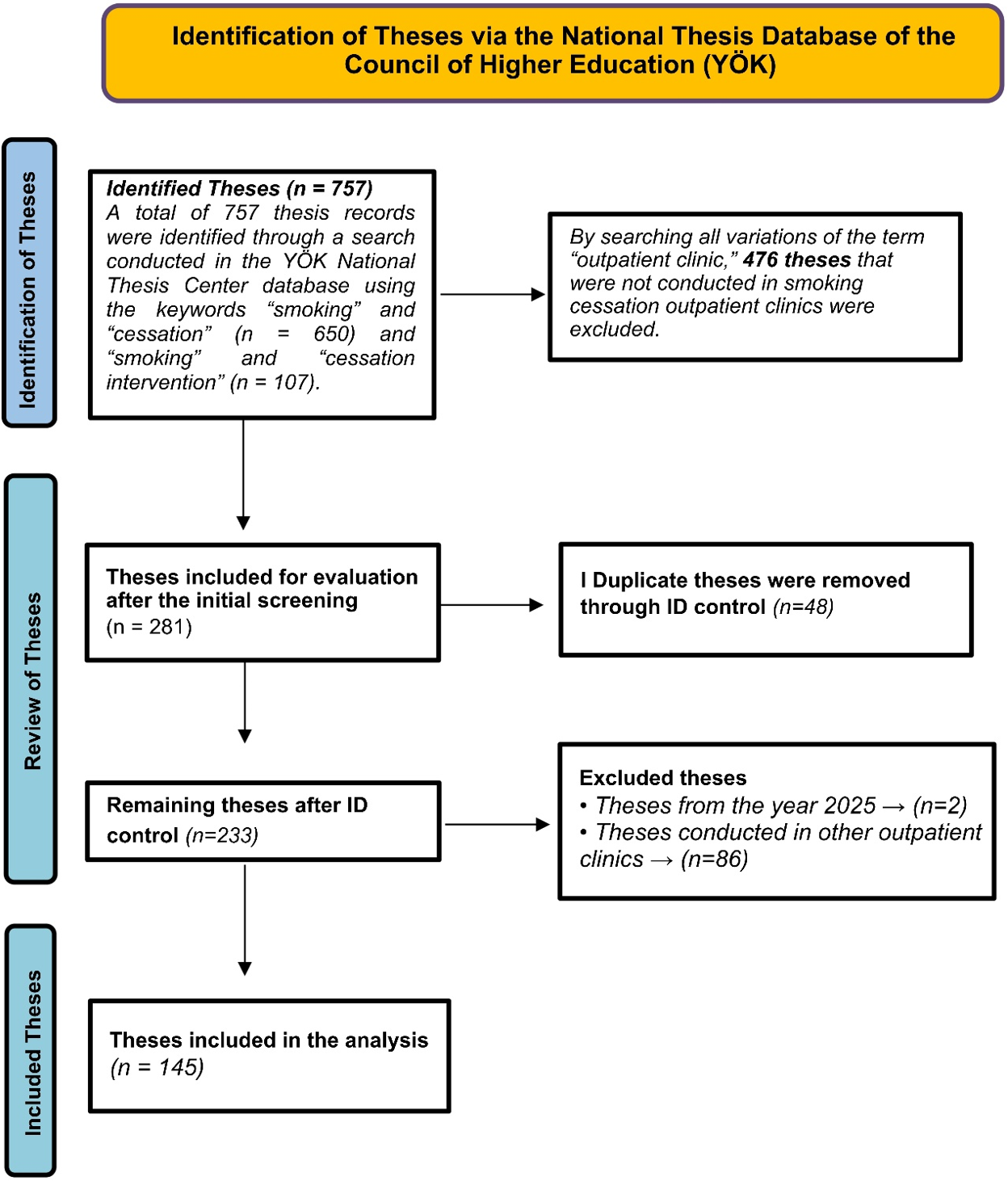
A two-stage advanced search strategy was applied using the YÖKTEZ database. In both searches, the search field was set to “All Fields” and the search type to “Contains.” In the first stage, the keywords “smoking” and “cessation” were used, yielding 650 records. In the second stage, the keywords “smoking” and “cessation intervention” were used, identifying an additional 107 records. In total, 757 theses were identified and subjected to screening.
Only theses conducted in smoking cessation outpatient clinics and completed between 1999 and 2024 were considered eligible for inclusion.
Following the identification phase, 476 theses that were not conducted in smoking cessation outpatient clinics were excluded. The remaining 281 theses were screened for eligibility. During this stage, 48 duplicate records were identified and removed based on thesis ID numbers, leaving 233 unique theses.
Subsequently, 2 theses conducted outside the defined time scope and 86 theses conducted in outpatient clinics other than smoking cessation clinics were excluded.
As a result, a total of 145 theses met the inclusion criteria and were included in the final analysis. The study selection process is presented in Figure 1.
Inclusion and Exclusion Criteria
Inclusion criteria:
- Graduate theses conducted in smoking cessation outpatient clinics
- Theses focusing on smoking cessation processes or related factors
- Theses accessible through the YÖKTEZ database
- Theses completed between 1999 and 2024
Exclusion criteria:
- Theses not conducted in smoking cessation outpatient clinics
- Studies conducted in other clinical settings
- Duplicate records
- Theses outside the defined time scope
- Irrelevant topics not directly related to smoking cessation
Study Selection Process
The study selection process was conducted systematically and is presented in a flow diagram (Figure 1). The diagram illustrates the identification, screening, eligibility, and inclusion stages of the study selection procedure.
Statistical Analysis
The analyses conducted in this study were primarily descriptive, focusing on frequencies, percentages, and distributions of key variables. In addition, simple comparative evaluations were performed, where appropriate to identify patterns across time, institutions, and research designs. Data management and analysis were conducted using Microsoft Excel, which was used for coding, categorisation, and calculation of descriptive statistics.
Findings
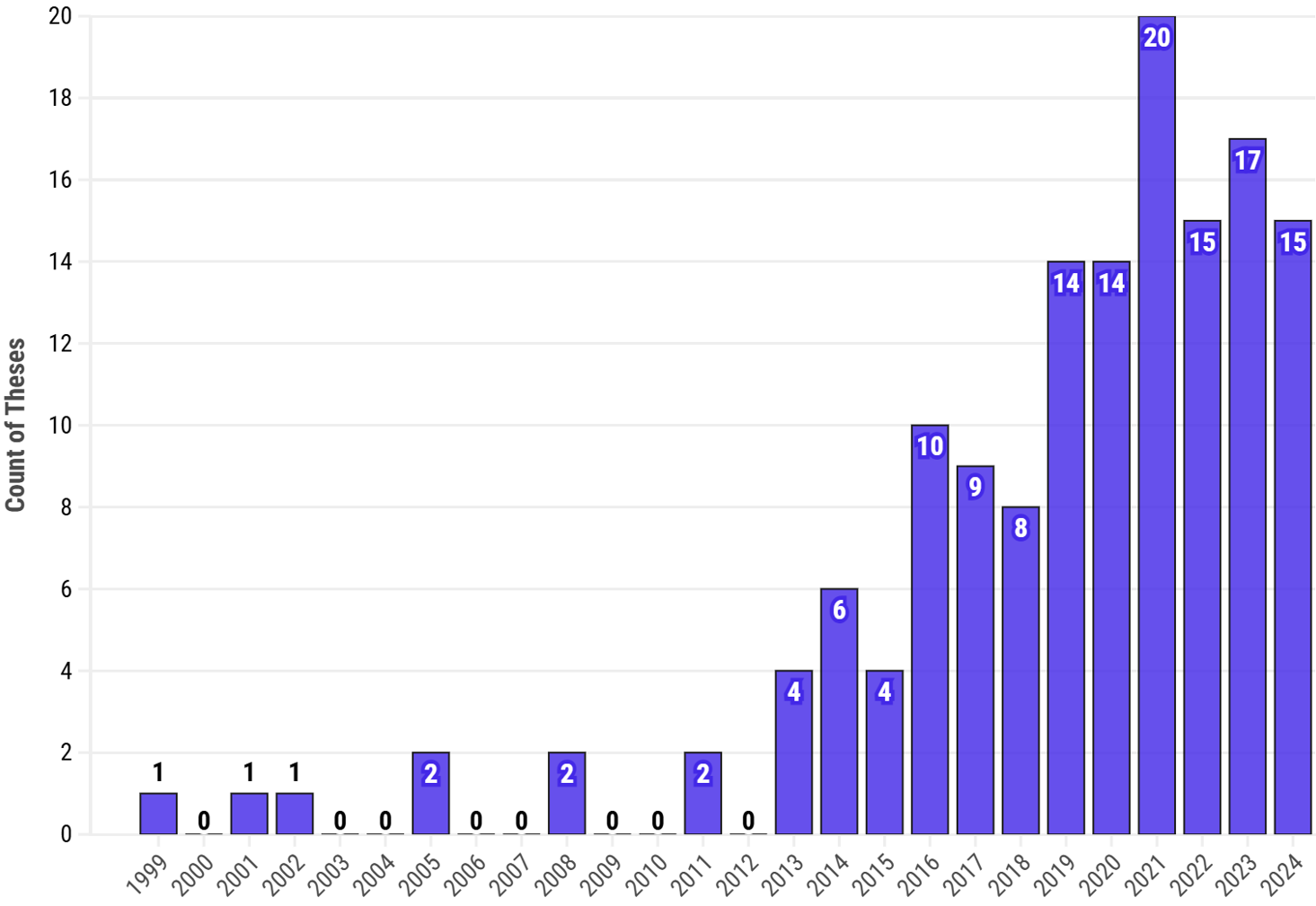
The year 2021 recorded the highest number of theses, with a total of 20 studies published. Nearly half of all theses (46.8%) were completed within the last five years (2019–2023). In contrast, during the fourteen-year period between 1999 and 2012, only nine theses (6.2%) were conducted. Notably, there was a marked increase in the number of theses in 2016 and 2019. The annual distribution of theses is presented in Figure 2.
The average length of the theses conducted in smoking cessation clinics was 88.4 ± 31 pages (median=86).
Table 1 illustrates the distribution of theses by universities. The University of Health Sciences published the highest number of theses, accounting for 29% (n=42) of the total. This was followed by Istanbul Medeniyet University (6.9%, n=10), Ege University (4.8%, n=7), Necmettin Erbakan University (4.8%, n=7), Aydın Adnan Menderes University (4.1%, n=6), Dokuz Eylül University (4.1%, n=6), and Selçuk University (4.1%, n = 6). Collectively, these seven universities accounted for 57.8% of all theses.
| Table 1. Distribution of theses by universities | ||
| University |
|
|
| Sağlık Bilimleri |
|
|
| İstanbul Medeniyet |
|
|
| Ege |
|
|
| Necmettin Erbakan |
|
|
| Aydın Adnan Menderes |
|
|
| Dokuz Eylül |
|
|
| Selçuk |
|
|
| Sivas Cumhuriyet |
|
|
| Ankara Yıldırım Beyazıt |
|
|
| Bursa Uludağ |
|
|
| İstanbul |
|
|
| Düzce |
|
|
| Hacettepe |
|
|
| Kahramanmaraş Sütçü İmam |
|
|
| Ondokuz Mayıs |
|
|
| Sağlık Bakanlığı |
|
|
| Dicle |
|
|
| İnönü |
|
|
| İstanbul -Cerrahpaşa |
|
|
| İzmir Katip Çelebi |
|
|
| Marmara |
|
|
| Recep Tayyip Erdoğan |
|
|
| Trakya |
|
|
| Beykent |
|
|
| Bolu Abant İzzet Baysal |
|
|
| Bülent Ecevit |
|
|
| Çukurova |
|
|
| Erciyes |
|
|
| Gülhane Askeri Tıp Akademisi |
|
|
| Gazi |
|
|
| Harran |
|
|
| Karadeniz Teknik |
|
|
| Kocaeli |
|
|
| Muğla Sıtkı Koçman |
|
|
| Okan |
|
|
| Süleyman Demirel |
|
|
| Ufuk |
|
|
| Üsküdar |
|
|
In terms of geographical distribution, the highest concentration of theses was observed in Istanbul, with a total of 45 studies conducted in this city. Istanbul was followed by Ankara (n=25), Konya (n=18), Izmir (n=16), Aydın (n=6), and Sivas (n=5). Overall, the theses were conducted in 22 provinces, while no studies were identified in 59 provinces. (Figure 3)
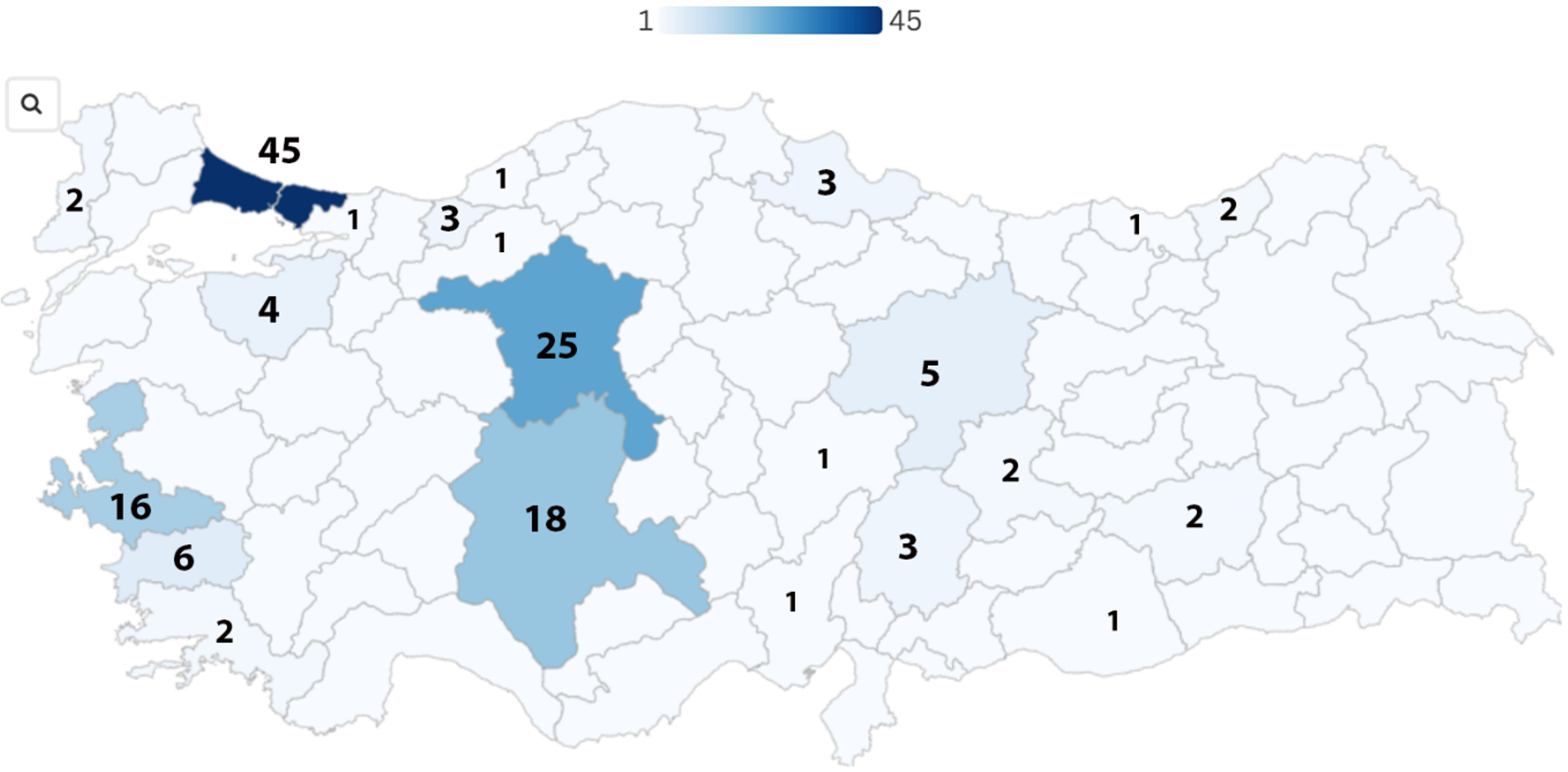
The geographical density of theses can be visualized through the following online map: https://public.flourish.studio/visualisation/22899128/
The majority of the theses were conducted within the Department of Family Medicine, which accounted for 71.7% (n=104) of all studies (Table 2). Family Medicine was followed by Pulmonology (11%, n=16), Public Health (5.5%, n=8), Addiction Counseling and Rehabilitation (4.1%, n=6), Public Health Nursing (1.4%, n=2), Health Management (1.4%, n=2), and Psychiatry (1.4%, n=2). Additionally, a small number of theses (0.7%, n=1 each) were found in the fields of Psychology, Otorhinolaryngology, Biostatistics and Medical Informatics, Natural Sciences, and Internal Medicine.
| Table 2. Characteristics of thesis studies conducted in smoking cessation clinics | ||
| Characteristic of thesis |
|
|
| Department in which the thesis was conducted | ||
| Family Practice |
|
|
| Chest Diseases |
|
|
| Public Health |
|
|
| Addiction Counseling and Rehabilitation |
|
|
| Public Health Nursing |
|
|
| Health Management |
|
|
| Psychiatry |
|
|
| Psychology |
|
|
| Otorhinolaryngology (ENT) |
|
|
| Biostatistics and Medical Informatics |
|
|
| Science |
|
|
| Internal Medicine |
|
|
| Academic titles of thesis advisors |
|
|
| Assoc. Prof. |
|
|
| Prof. |
|
|
| Asst. Prof. |
|
|
| M.D. Specialist |
|
|
| Type of thesis | ||
| Medical Specialty Thesis |
|
|
| Master’s Thesis |
|
|
| PhD |
|
|
| Type of Research |
|
|
| Mixed-Methods |
|
|
| Cross-Sectional |
|
|
| Descriptive |
|
|
| Methodological |
|
|
| Interventional / Experimental |
|
|
| Qualitative |
|
|
Regarding the academic titles of thesis advisors, the highest proportion was held by Associate Professors (42.1%, n=61), followed by Professors (39.3%, n=57) and Assistant Professors (13.1%, n=19). Advisors with the title Specialist Physician constituted 5.5% (n=8) of the total.
When thesis types were examined, the vast majority were medical specialty theses (86.8%, n=126), followed by Master’s theses (11.1%, n=16) and Doctoral dissertations (2.1%, n=3).
In terms of research design, descriptive studies were the most common (n=59), followed by cross-sectional (n=50), interventional (n=24), descriptive–cross-sectional (n=7), mixed-method (n=2), qualitative (n=2), and methodological (n=1) studies.
Sample sizes varied by research type: the median sample size of participants was 425 [102–2594] for cross-sectional studies, 164 [16–803] for descriptive studies, 92 [29–516] for interventional studies, 226 [161–427] for descriptive–cross-sectional studies, 302 [179–425] for mixed-method studies, and 26.5 [13–40] for qualitative studies. The single methodological study had a sample size of 120 participants (Table 2).
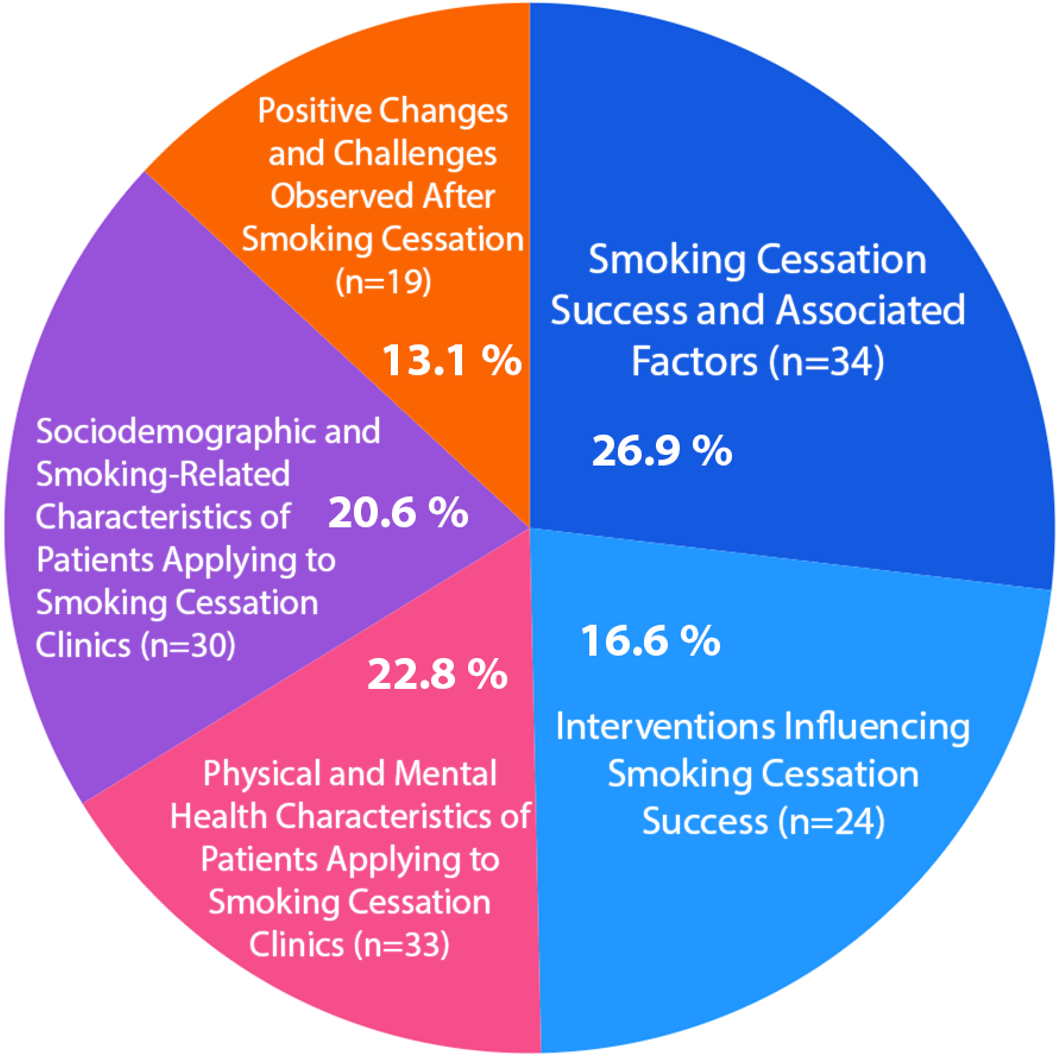
When grouped by research topic, the most frequently studied theme was “Smoking Cessation Success and Associated Factors” with 39 theses (26.9%). This was followed by studies examining the physical and psychological health characteristics of patients attending smoking cessation clinics (22.8%, n=33) and those focusing on sociodemographic and smoking-related characteristics (20.6%, n=30). Theses investigating interventions affecting smoking cessation success constituted 16.6% (n=24), while those exploring positive changes and challenges after smoking cessation represented 13.1% (n=19). The distribution of thesis topics is presented in Figure 4.
The frequencies of smoking cessation success reported in the theses vary noticeably according to follow-up duration and study characteristics. In Table 3, which includes 39 theses conducted between 2002 and 2023, sample sizes range from 78 to 1570 participants, and participant ages are predominantly concentrated in the late 30s and early 40s. In some theses, age information or inclusion criteria (such as age ranges or pack-year levels) were not clearly specified.
|
*Patients who initiated varenicline therapy and maintained treatment for at least one month were included in the study. **Patients aged 25 to 65 years were included in the study. ***Patients who had been smoking for at least two years and were between 18 and 70 years of age were included in the study. ****Patients over 40 years of age with a smoking history of at least 15 pack-years were included in the study. |
|||||||||
| Table 3. Smoking cessation success rates reported in thesis studies examining smoking cessation outcomes and associated factors | |||||||||
| No | Thesis ID | Data collection period |
|
|
|
|
|
|
|
| 1 | 165502 | May 2002 – December 2003 |
|
|
|
||||
| 2 | 596419 | January 2002 – May 2018 |
|
|
|
|
|
|
|
| 3 | 203607 | January 2005 – March 2006 |
|
|
|
|
|
||
| 4 | 351357 | January 2010 – December 2012 |
|
|
|||||
| 5 | 711466 | January 2011 – December 2012 |
|
|
|
||||
| 6 | 431610 | January 2012 – January 2013 |
|
|
|
||||
| 7 | 533647 | January 2012 – December 2012 |
|
|
|
|
|
|
|
| 8 | 536720 | January 2014 – August 2017 |
|
|
|
|
|
|
|
| 9 | 466990 | January 2014 – December 2015 |
|
|
|
||||
| 10 | 426616 | March 2014 – July 2015 |
|
|
|
||||
| 11 | 726223 | 2015-2020 |
|
|
|
||||
| 12 | 741263 | January 2015 – December 2019 |
|
|
|
|
|
||
| 13 | 733419 | February 2015 – December 2020 |
|
|
|
|
|
|
|
| 14 | 440396 | February 2015 – April 2015 |
|
|
|
|
|||
| 15 | 460197 | March 2015 – March 2016* |
|
|
|
|
|||
| 16 | 644296 | May 2015 – December 2017 |
|
|
|
|
|
||
| 17 | 549587 | May 2016 – May 2017 |
|
|
|
||||
| 18 | 505677 | January 2017 – July 2017 |
|
|
|
|
|
||
| 19 | 689164 | January 2017 – December 2019 |
|
|
|
|
|||
| 20 | 626931 | September 2017 – August 2018 |
|
|
|
||||
| 21 | 579258 | July 2017 – December 2018** |
|
|
|
||||
| 22 | 673587 | January 2018 to May 2019 |
|
|
|
||||
| 23 | 655279 | October 2018 – 31 March 2019 |
|
|
|
||||
| 24 | 583553 | March 2019 – June 2019*** |
|
|
|
||||
| 25 | 903507 | March 2019 – June 2022 |
|
|
|
|
|
|
|
| 26 | 824520 | April 2019 – July 2019 |
|
|
|
|
|||
| 27 | 737666 | August 2019 – August 2021 |
|
|
|
||||
| 28 | 691691 | September 2019 to March 2021 |
|
|
|
||||
| 29 | 749049 | August 2020 – August 2021 |
|
|
|
|
|||
| 30 | 683488 | September 2020 – February 2021 |
|
|
|||||
| 31 | 719723 | January 2021 – December 2021 |
|
|
|
||||
| 32 | 708241 | February 2021 – July 2021 |
|
|
|||||
| 33 | 778962 | February 2021 and December 2021 |
|
|
|
||||
| 34 | 774356 | January 2022 – March 2022 |
|
|
|
|
|||
| 35 | 905810 | January 2022 – December 2022 |
|
|
|
|
|
|
|
| 36 | 815009 | January 2022 – December 2022 |
|
|
|||||
| 37 | 774522 | November 2022 – January 2023 |
|
|
|
|
|
|
|
| 38 | 873109 | April 2023 – October 2023 |
|
|
|||||
| 39 | 847336 | Not reported**** |
|
|
|
||||
Regarding short-term outcomes, ≥3-month cessation success was assessed in 14 theses, with reported percentage values ranging from 12.8% to 76.7%. The absence of a clearly defined follow-up duration in some studies limits the comparability of results. ≥6-month cessation success was reported in 17 theses, with percentage values ranging from 5% to 55.1%. In more recent studies with larger samples, ≥6-month cessation levels generally appeared to fall within moderate ranges.
One-year cessation success was reported in 13 theses, with percentage values ranging from 11.1% to 46.2%. Although a higher cessation level was observed in one study with a smaller sample, one-year cessation frequencies in larger samples were mostly in low to moderate ranges.
Long-term follow-up data were limited. ≥2-year cessation success was evaluated in only five theses, with percentage values ranging from 10.1% to 25.9%. Follow-up extending to ≥5 years appeared in only three theses, with cessation levels reported between 4.8% and 11.6%. Overall, the table indicates that most theses report only short- and medium-term cessation frequencies (≥3 months, ≥6 months), while follow-up of one year or longer is included in fewer studies. In addition, differences in sample size, age distribution, inclusion criteria, and data collection periods contribute to the variability observed in reported cessation frequencies
Smoking cessation success rates reported in thesis studies examining smoking cessation outcomes and associated factors are presented in Table 3.
Upon examination of Table 3, it is evident that the smoking cessation success rates reported in the theses vary according to different follow-up periods. The sample sizes employed in the studies span a wide range, from small samples of fewer than 100 participants to larger samples exceeding 1,500 individuals. The mean age of participants was most frequently reported to fall within the forties, although some studies did not provide age information.
Success rates were documented at the first, third, sixth, and twelfth months of follow-up; in some theses, only short-term outcomes were reported, while in others, the success criterion or follow-up period was not specified. It was observed that the number of studies reporting long-term follow-up data (≥2 years and ≥5 years) is limited.
Discussion
This study reviewed graduate theses conducted in smoking cessation clinics in Türkiye between 1999 and 2024. The findings indicate that academic interest in this field has increased markedly in recent years, that research has been concentrated in specific universities and cities, and that certain methodological patterns have become prominent in study designs.
When the distribution of theses by year was examined, 2021 emerged as the most productive year, with 20 theses completed about smoking cessation. Similarly, the global bibliometric analysis by Xu et al.39 also reported a sharp increase in smoking cessation research in 2021. Nearly half of all theses (46.8%) were published in the last five years (2019–2023), a trend that may be attributed to rising public awareness regarding tobacco control and the institutionalization of smoking cessation services in Türkiye. The increases observed in 2016 and 2019 likely correspond to the impact of nationwide campaigns such as “Smoke-Free Airspace” and the National Tobacco Control Program Action Plan.40 Comparable patterns have been observed internationally. For instance, Richa et al.41 reported a sharp rise in tobacco-related publications in 2016, followed by a decline after 2017, and another increase in 2019 and 2021, possibly linked to the global COVID-19 pandemic. However, given the bibliometric nature of the present study, such temporal associations should be interpreted cautiously, as the analysis cannot establish causal relationships between policy developments and research output.
Regarding institutional distribution, the concentration of theses within a limited number of universities suggests that research capacity in smoking cessation clinics is closely linked to the presence of well-established training and research hospitals. In a bibliometric analysis on alcohol use disorder, Oksal et al.42 found that most theses were conducted at Ege University, followed by Üsküdar University and Ankara University. These results highlight the central role of university hospitals in academic production related to addiction. Internationally, Xu et al.39 identified the most productive institutions in smoking cessation research as University College London (UK), University of California San Francisco (UCSF) (USA) and Brown University (USA). Similarly, Sweileh43 found that Maastricht University (The Netherlands), UCSF (USA) and Brown University (USA) were leading institutions in technology-based interventions for tobacco use prevention and treatment. Taken together, these findings suggest that tobacco research tends to cluster in institutions with strong clinical infrastructure and research networks, which may reinforce existing disparities in academic productivity.
From a geographical perspective, the strong concentration of theses in a limited number of metropolitan areas indicates significant regional inequalities in research capacity. This concentration in major urban centers mirrors findings by Candan et al.44, who reported a similar pattern in their bibliometric analysis of theses on screen addiction. Such clustering likely reflects differences in access to specialized clinics, academic mentorship, and research infrastructure.
In terms of academic disciplines, the majority of theses originated from Family Medicine (71.7%) and Pulmonology (11%) fields, consistent with the primary role of these fields in delivering smoking cessation services at the first level of care. However, the relatively small number of studies in fields such as Public Health, Nursing, Health Management, Psychiatry, Psychology, and Internal Medicine suggests that the multidisciplinary dimension of smoking cessation has not been adequately reflected in academic research. This imbalance may indicate that research activity largely follows clinical service structures rather than interdisciplinary public health perspectives, potentially limiting the diversity of methodological approaches and theoretical frameworks applied to tobacco dependence.
In terms of research design, the majority of theses were descriptive or cross-sectional, with few intervention-based or qualitative studies. Polit & Beck45 note that “while descriptive studies can identify patterns, they cannot establish causal relationships and thus yield limited scientific inference” (p. 174). The predominance of such designs suggests that the methodological maturity of research conducted in smoking cessation clinics remains limited. The scarcity of intervention and applied research restricts the translation of scientific findings into practical public health outcomes.46 Haghparast-Bidgoli et al.47 identify the primary global challenge in smoking cessation not as the absence of effective interventions, but as the suboptimal implementation and translation of existing evidence into real-world practice. Yet both national and international evidence shows that experimental studies evaluating the effects of pharmacological and behavioral interventions provide valuable insights into improving smoking cessation success rates.48;49 While such descriptive evidence is valuable for understanding the clinical profile of individuals attending cessation clinics, the relatively limited number of studies examining behavioral or pharmacological interventions restricts the practical applicability of these findings.
Importantly, the present study is based on bibliometric data derived from thesis records, and therefore its findings should be interpreted within the methodological limitations of such analyses. Bibliometric approaches can identify patterns in research production, but they cannot directly assess study quality, causal relationships, or the real-world effectiveness of interventions. Nevertheless, by systematically mapping the thematic, institutional, and methodological characteristics of theses conducted in smoking cessation clinics, this study contributes to the literature by providing a comprehensive overview of national research activity in this field.
The general patterns observed across theses suggest that smoking cessation success tends to decline as follow-up duration increases. While short-term cessation levels tend to be higher, substantial decreases are observed in medium- and long-term follow-up, which is consistent with the chronic nature of tobacco dependence and the strong tendency toward relapse. This pattern suggests that many studies conducted in smoking cessation clinics may primarily capture early treatment outcomes rather than sustained abstinence, highlighting the importance of longer follow-up periods when evaluating cessation effectiveness.50;51 Studies demonstrating that adherence to treatment for at least three months enhances cessation outcomes further support these observations. Taken together, these findings indicate that early cessation success is strongly influenced by treatment adherence and clinical support; however, maintaining abstinence remains a major challenge in long-term follow-up.
A portion of the variability observed across theses arises from methodological differences. The lack of clear definitions regarding the duration of cessation criteria, the exclusive reporting of selected follow-up points, and heterogeneity in sample characteristics limit comparability across studies. In addition, several theses relied on relatively short follow-up periods, which may overestimate cessation success when long-term relapse patterns are not captured. This also constrains the ability to evaluate smoking cessation clinic data in a standardized manner at the national level. Furthermore, the predominance of descriptive research and the scarcity of intervention-based studies weaken the capacity to draw robust conclusions about which approaches most effectively enhance cessation outcomes. These methodological characteristics suggest that the current body of thesis research reflects an early stage of evidence development rather than a mature intervention-oriented research field.
Evidence from the broader literature demonstrates that combining behavioral support with pharmacological treatment substantially increases the likelihood of quitting. Batra’s findings, which show that structured interventions can raise one-year cessation levels to as high as 40%, highlight the potential impact of integrated approaches.48
In this context, although the existing body of thesis research provides valuable insight, guiding clinical practice in a meaningful way will require studies that employ standardized cessation criteria, include long-term follow-up, and directly assess the effectiveness of interventions. Strengthening methodological rigor and expanding intervention-based research may therefore improve the translation of academic findings into clinical and public health practice. Such research will contribute to the advancement of clinical practice and support more sustainable outcomes in tobacco dependence treatment.
Limitations
This study has several limitations that should be considered when interpreting the findings. First, the dataset was limited to theses available in the National Thesis Center (YÖKTEZ) database. Therefore, other relevant academic outputs, such as journal articles or unpublished studies, were not included in the analysis. This may limit the generalisability of the findings and the comprehensiveness of the research landscape.
Second, the thematic categorisation of theses was developed through an inductive process based on the researchers’ knowledge and experience. Although efforts were made to ensure consistency through independent coding and consensus, the classification process may still involve a degree of subjectivity.
In addition, variability in reporting standards across theses (e.g., inconsistent definitions of smoking cessation success and follow-up durations) may have limited the comparability of findings.
Conclusion and Recommendations
This study examined graduate theses conducted in smoking cessation clinics in Türkiye according to year, university, province, research design, and thematic focus. The findings revealed a notable increase in academic interest toward smoking cessation services in recent years; however, these studies were largely concentrated within certain universities, provinces, and methodological approaches. The majority of the theses employed descriptive and cross-sectional designs, whereas intervention-based and qualitative studies were considerably limited. Moreover, the research primarily focused on describing individual characteristics rather than evaluating the effectiveness of behavioral or pharmacological interventions.
Based on these findings, the following recommendations are proposed for future researchers:
- Experimental, intervention-based studies are recommended, as they can inform the development of effective clinical practices and evidence-based intervention models.
- Qualitative research is needed to better understand the challenges individuals face during the smoking cessation process and to identify their support needs.
- Future theses should not be limited to major metropolitan areas but should also include smoking cessation clinics in diverse geographical regions to ensure more balanced representation across the country.
Ethical approval
The data obtained from the Council of Higher Education Thesis Center (YÖK Tez Merkezi) are open-access and include only bibliographic information such as title, abstract, page count, advisor, author, thesis type, university, and year of publication. As this study utilized publicly available open data, ethics committee approval was not required.
Source of funding
The authors declare the study received no funding.
Conflict of interest
The authors declare that there is no conflict of interest.
References
- World Health Organization (WHO). WHO report on the global tobacco epidemic, 2025: warning about the dangers of tobacco. Geneva: World Health Organization; 2025. Available at: https://www.who.int/publications/i/item/9789240112063
- Ministry of Health of the Republic of Türkiye. Alo 171 smoking cessation counseling hotline. 2024. Available at: https://alo171.saglik.gov.tr/?_Dil=1
- World Health Organization (WHO). WHO framework convention on tobacco control: guidelines for implementation of article 5, articles 8 to 14. Geneva: World Health Organization; 2013. Available at: https://iris.who.int/server/api/core/bitstreams/264104b3-241a-4e48-88f9-aa7120779ffc/content
- World Health Organization (WHO). Strategies to increase the delivery of smoking cessation interventions in primary care. In: WHO global report on trends in prevalence of tobacco use 2000–2025. Geneva: World Health Organization; 2021. Available at: https://iris.who.int/server/api/core/bitstreams/94b19096-c193-49c4-bcbb-653aa34ee29a/content
- Bilir N, Çakır B, Dağlı E, Ergüder T, Önder Z. Tobacco control in Turkey. Geneva: World Health Organization; 2010. Available at: https://iris.who.int/handle/10665/345413
- DiFranza JR, Savageau JA, Rigotti NA, et al. Development of symptoms of tobacco dependence in youths: 30-month follow-up data from the DANDY study. Tob Control 2002; 11: 228-235. https://doi.org/10.1136/tc.11.3.228
- World Health Organization (WHO). WHO report on the global tobacco epidemic 2021: addressing new and emerging products. Geneva: World Health Organization; 2021. Available at: https://www.who.int/publications/i/item/9789240032095
- Cahill K, Stevens S, Perera R, Lancaster T. Pharmacological interventions for smoking cessation: an overview and network meta-analysis. Cochrane Database Syst Rev 2013; 5. https://doi.org/10.1002/14651858.CD009329.pub2
- Hughes JR, Keely J, Naud S. Shape of the relapse curve and long-term abstinence among untreated smokers. Addiction 2004; 99: 29-38. https://doi.org/10.1111/j.1360-0443.2004.00540.x
- Callaghan L, Yong HH, Borland R, Cummings KM, Hitchman SC, Fong GT. What kind of smoking identity following quitting would elevate smokers relapse risk? Addict Behav 2021; 112. https://doi.org/10.1016/j.addbeh.2020.106654
- T.C. Resmi Gazete. Tütün Ürünlerinin Zararlarının Önlenmesi Ve Kontrolü Hakkında Kanun. Available at: https://www.mevzuat.gov.tr/mevzuat?MevzuatNo=4207&MevzuatTur=1&MevzuatTertip=5
- T.C. Resmi Gazete. Tütün Bağımlılığı Tedavi Ve Eğitim Birimleri Hakkında Yönetmelik. Available at: https://www.mevzuat.gov.tr/mevzuat?MevzuatNo=15510&MevzuatTur=7&MevzuatTertip=5
- Ministry of Health of the Republic of Türkiye. Tobacco control strategy document and action plan 2024-2028. Ankara: Ministry of Health of the Republic of Türkiye; 2024. Available at: https://hsgm.saglik.gov.tr/depo/Yayinlarimiz/Eylem_Planlari/2024-2028_Tutun_Kontrolu_Strateji_Belgesi_ve_Eylem_Plani.pdf
- Uzaslan E. Sigarayı bırakma yöntemleri. Sted J Contin Med Educ 2003; 12: 166-171.
- West R, Raw M, McNeill A, et al. Health-care interventions to promote and assist tobacco cessation: a review of efficacy, effectiveness and affordability for use in national guideline development. Addiction 2015; 110: 1388-1403. https://doi.org/10.1111/add.12998
- Al Attabi AM, Al Rawahi M, AlSumri H. Characteristics of college students attending the smoking cessation clinic at Sultan Qaboos University Hospital: a cross-sectional study. Int J High Risk Behav Addict 2025; 4. https://doi.org/10.5812/ijhrba-159158
- Fiore MC, Jaén CR, Baker TB, et al. Treating tobacco use and dependence: 2008 update. Clinical practice guideline. Rockville, MD: U.S. Department of Health and Human Services, Public Health Service; 2008.
- Rigotti NA. Strategies to help a smoker who is struggling to quit. JAMA 2012; 308: 1573-1580. https://doi.org/10.1001/jama.2012.13043
- NHS Digital. Statistics on NHS stop smoking services in England: April 2021 to March 2022. London: NHS Digital; 2022. Available at: https://digital.nhs.uk/data-and-information/publications/statistical/statistics-on-nhs-stop-smoking-services-in-england/april-2021-to-march-2022
- West R, McNeill A, Raw M. Smoking cessation guidelines for health professionals: an update. Thorax 2000; 55: 987-999. https://doi.org/10.1136/thorax.55.12.987
- Kastaun S, Leve V, Hildebrandt J, et al. Study protocol of the German Study on Tobacco Use (DEBRA), a national household survey of smoking behaviour and cessation. BMC Public Health 2017; 17: 1-9. https://doi.org/10.1186/s12889-017-4328-2
- World Health Organization. WHO report on the global tobacco epidemic, 2023: protect people from tobacco smoke. Geneva: World Health Organization; 2023. Available at: https://www.who.int/publications/i/item/9789240077164
- National Health Service (NHS). Using e-cigarettes to stop smoking. National Health Service; 2025. Available at: https://www.nhs.uk/live-well/quit-smoking/using-e-cigarettes-to-stop-smoking/
- Royal Australian College of General Practitioners. Supporting smoking and vaping cessation: a guide for health professionals, 2024. Available at: https://www.racgp.org.au/getmedia/924ba55d-dc47-41f9-bf5b-7a4cf9e19963/RACGP-NVP-and-Vaping-Cessation-September-2024.pdf.aspx
- Royal College of Physicians. Nicotine without smoke: tobacco harm reduction. London: Royal College of Physicians; 2019. Available at: https://www.rcp.ac.uk/resources/nicotine-without-smoke-tobacco-harm-reduction/ (Accessed on Dec 4, 2025).
- Selamoglu M, Malamardi S, Erbas B, Wilson H, Brown J, Barton C. Australian general practitioners’ knowledge, attitudes and prescribing intentions for e-cigarettes as a smoking cessation aid: a nationwide baseline and 12-month follow-up survey. Harm Reduct J. 2025; 22: 35. https://doi.org/10.1186/s12954-025-01175-2
- Glantz SA, Bareham DW. E-cigarettes: use, effects on smoking, risks, and policy implications. Annu Rev Public Health 2018; 39: 215-235. https://doi.org/10.1146/annurev-publhealth-040617-013757
- Greenhalgh EM, Scollo MM, Winstanley MH. Tobacco in Australia: facts and issues. Melbourne: Cancer Council Victoria; 2022. Available at: https://www.tobaccoinaustralia.org.au/downloads/chapters/Introduction.pdf (Accessed on Apr, 2025).
- National Institute for Health and Care Excellence (NICE). Tobacco: preventing uptake, promoting quitting and treating dependence (NICE Guideline NG209). London: NICE; 2021. Available at: https://www.nice.org.uk/guidance/ng209
- U.S. Preventive Services Task Force. Interventions for tobacco smoking cessation in adults, including pregnant persons: US Preventive Services Task Force recommendation statement. JAMA 2021; 325: 265-279. https://doi.org/10.1001/jama.2020.25019
- Etter J. Comparing abrupt and gradual smoking cessation: a randomized trial. Drug Alcohol Depend 2011; 118: 360-365. https://doi.org/10.1016/j.drugalcdep.2011.04.016
- Tan J, Zhao L, Chen H. A meta-analysis of the effectiveness of gradual versus abrupt smoking cessation. Tob Induc Dis 2019; 17. https://doi.org/10.18332/tid/100557
- Lindson-Hawley N, Banting M, West R, Michie S, Shinkins B, Aveyard P. Gradual versus abrupt smoking cessation: a randomized, controlled noninferiority trial. Ann Intern Med 2016; 164: 585-592. https://doi.org/10.7326/M14-2805
- Akman M, Çifçili SS. Smoking cessation treatments: a review based on reviews. Turk Klin J Fam Med Spec Top 2010; 1: 54-62. Available at: https://www.turkiyeklinikleri.com/article/en-sigara-birakma-tedavileri-derlemeleri-temel-alan-bir-derleme-59643.html
- Borrelli B. Motivational interviewing for smoking cessation. In: Advances in smoking cessation. London: Future Medicine Ltd; 2013: 129-141.
- Rakel RE, Houston T. Nicotine addiction. In: Rakel RE, editor. Textbook of family medicine. 7th ed. Philadelphia: Saunders Elsevier; 2007: 1457-1471. Available at: https://csts.ua.edu/files/2016/09/Nicotine-Addiction-Rakel-Textbook-of-Family-Practice-6th-Ed.pdf
- Özge C. 5A and 5R concepts in smoking cessation. In: Aytemur AZ, Akçay Ş, Elbek O, editors. Tobacco and tobacco control. Ankara: Turkish Thoracic Society; 2011: 451-459.
- Yaşar Z, Kurt ÖK, Talay F, Kargı A. One-year follow-up results of smoking cessation outpatient clinic: factors affecting the cessation of smoking. Eurasian J Pulmonol 2014; 16: 99-104. https://doi.org/10.5152/ejp.2014.48295
- Xu Y, Gu Z, Zhang Y, et al. Global trends in smoking cessation research from 2002 to 2021: a bibliometric and visual analysis. Prev Med Rep 2022; 30: 101991. https://doi.org/10.1016/j.pmedr.2022.101991
- T.C. Resmi Gazete. Ulusal Tütün Kontrol Programı Eylem Planı (2015-2018). Available at: https://www.resmigazete.gov.tr/eskiler/2015/01/20150127-8.htm
- Richa S, Praveen S, Albariqi AA, et al. Global trends and emerging frontiers in smoking and smokeless tobacco research: a bibliometric analysis over the past decade. Healthcare 2025; 13: 1224. https://doi.org/10.3390/healthcare13111224
- Oksal H, Büber Ö, Demirci HT. Bibliometric analysis of theses conducted about alcohol use disorder in Turkey. Curr Addict Res 2024; 8: 14-22. https://doi.org/10.32739/car.2024.8.2.230
- Sweileh WM. Technology-based interventions for tobacco smoking prevention and treatment: a 20-year bibliometric analysis (2003–2022). Subst Abuse Treat Prev Policy 2024; 19: 13. https://doi.org/10.1186/s13011-024-00595-w
- Candan F, Sağlam A, Şirin İ. Bibliometric analysis of postgraduate theses on screen addiction in Turkey. Ulusal Eğitim Dergisi 2023; 3: 2240-2257. https://doi.org/10.5281/zenodo.10446212
- Polit DF, Beck CT. Nursing research: generating and assessing evidence for nursing practice. 11th ed. Philadelphia: Wolters Kluwer; 2020.
- Glasgow RE, Lichtenstein E, Marcus AC. Why don’t we see more translation of health promotion research to practice? Rethinking the efficacy-to-effectiveness transition. Am J Public Health 2003; 93: 1261-1267. https://doi.org/10.2105/AJPH.93.8.1261
- Haghparast-Bidgoli H, Pantoja T, Vasan A. Development of an Evidence and Gap Map (EGM) of interventions to increase smoking cessation: a study protocol. Tob Prev Cessat 2020; 6: 46. https://doi.org/10.18332/tpc/124117
- Batra A. Treatment of tobacco dependence. Dtsch Arztebl Int 2011; 108: 555-564. https://doi.org/10.3238/arztebl.2011.0555
- Taş F, Seviğ EÜ, Güngörmüş Z. Use of motivational interview technique with transtheoretical model for behavioral change in smoking addiction. Current Approaches in Psychiatry 2016; 8: 380-392. https://doi.org/10.18863/pgy.253444
- Demir T, Tutluoğlu B, Koç N & Bilgin L. One-year follow up results of smoking cessation outpatient clinic. Tuberkuloz ve Toraks 2004; 52: 63-68. https://europepmc.org/article/med/15143375
- Sağlam L. Investigation of the results of a smoking cessation clinic and the factors associated with success. Turkish Journal of Medical Sciences 2012; 42: 515-522. https://doi.org/10.3906/sag-1101-1452
Copyright and license
Copyright © 2026 The Author(s). This is an open access article distributed under the Creative Commons Attribution License (CC BY), which permits unrestricted use, distribution, and reproduction in any medium or format, provided the original work is properly cited.